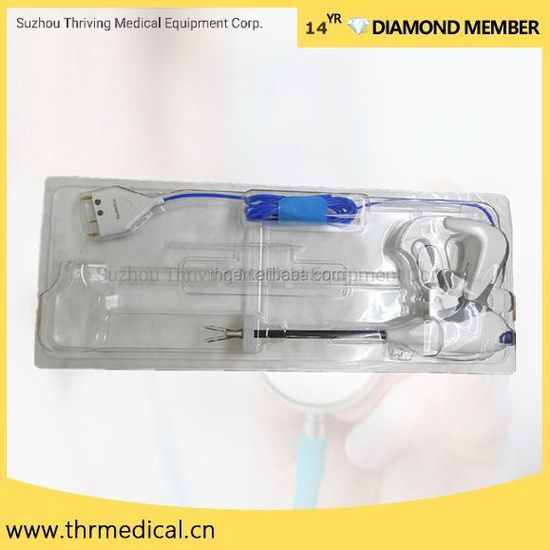
Vessel sealing closing instrument manufacturers
I have found results from400+products and200+suppliers aboutVessel sealing closing instrument
Ligasure Similar 7mm Diameter Bipolar Vessel Sealing&Cutting Laparoscopic Instrument
US$180.00-200.00
1 Piece(MOQ)
Electrosurgery Generator Highfrequency Surgical Maryland Ligasure Bipolar Vessel Sealing Device
US$3,000.00-3,800.00
1 Set(MOQ)
High-Frequency Surgical Ligasure Maryland Vessel Sealing and Cutting Handpieces
US$3,000.00-3,500.00
1 Set(MOQ)
Large Vessel Sealing of 7mm Bipolar Electrosurgical Instrument Energy Platform
US$3,000.00-3,500.00
1 Set(MOQ)
Ligasure Intelligent Bipolar Vessel Sealing and Cutting Small Jaw Handpieces
US$180.00-200.00
1 Set(MOQ)
Advanced Intellegent Feedback-Controlled Bipolar Reusable 7mm Vessel Sealing Forceps
US$500.00-580.00
1 Set(MOQ)
Sm-5000b Ligasure Maryland Bipolar Vessel Sealing Energy System High Frequency Generator
US$3,000.00-3,500.00
1 Set(MOQ)
Maryland Ligasure Vessel Fusion Sealing Laparoscopic Bipolar High Frequency Forceps
US$3,000.00-3,500.00
1 Set(MOQ)
Sourcing guidance for Vessel Sealing Closing Instrument
What are the key technical specifications to consider when sourcing vessel sealing instruments?
Buyers must prioritize Electrosurgical Units (ESU) that feature Tissue Sensing Technology (like Instant Response™ or similar), which adjusts power output based on tissue impedance. Key specs include a maximum power output of 150W-300W, compatibility with bipolar and ultrasonic modalities, and ergonomic handle designs for laparoscopic or open surgery. Ensure the instrument provides a permanent seal capable of withstanding three times systolic blood pressure.
Which international compliance standards are mandatory for these medical devices?
As Class II or Class III medical devices, they must adhere to ISO 13485 (Medical devices — Quality management systems). For market entry, verify CE Marking (MDR 2017/745) for Europe, FDA 510(k) clearance for the U.S., and IEC 60601-1 for electrical safety. Suppliers on Made-in-China.com should provide valid Declaration of Conformity and Test Reports from accredited bodies.
How do I evaluate the functional reliability of the sealing and cutting mechanism?
Request data on thermal spread; high-quality instruments limit lateral thermal damage to less than 2mm. The blade life cycle should be tested for at least 50-100 activations without dulling in reusable models, or guaranteed performance in single-use disposables. Ask for clinical trial summaries or animal lab validation reports to confirm seal burst pressure consistency.
What are the usage scenarios and compatibility requirements for these instruments?
These instruments are used in General Surgery, Gynecology, and Urology. Ensure the plug connector is compatible with your existing generators (e.g., ForceTriad, Valleylab, or proprietary Chinese brands). Check if the supplier offers 5mm or 10mm diameters and varying shaft lengths (37cm for laparoscopy or 20cm for open surgery) to meet diverse surgical needs.
Cross-Border Procurement & Risk Management for Medical Devices
How can I mitigate the risk of purchasing substandard medical equipment?
Always conduct a Factory Audit or hire a third-party inspector (like SGS or Intertek) to verify the Cleanroom (Class 100,000) environment. Use Made-in-China.com's Secured Trading services to ensure payment is only released after the Pre-shipment Inspection (PSI) confirms the goods meet the agreed-upon technical specifications.
What are the best strategies for negotiating with medical hardware suppliers?
Focus on Total Cost of Ownership (TCO) rather than just the unit price. Negotiate for extended warranties (24 months+), inclusion of spare parts (cables, blades), and technical training materials. For bulk orders, aim for a 15-20% discount by committing to an annual volume rather than a one-time spot purchase.
What shipping precautions are necessary for sensitive electronic medical instruments?
Instruments must be shipped using Anti-static packaging and Shock-absorbent foam. Ensure the outer cartons are double-walled and marked with 'Fragile' and 'Keep Dry' symbols. For international transit, choose Air Freight for high-value electronics to minimize humidity exposure and vibration compared to sea freight.
How do I handle customs clearance for regulated medical devices?
Ensure the supplier provides a detailed Commercial Invoice, Packing List, and Certificate of Origin. Crucially, the HS Code (typically 9018.90) must be accurate. Verify that the Product Labeling (including UDI - Unique Device Identification) complies with the destination country's language and regulatory requirements to avoid customs seizure.