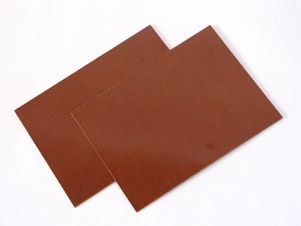
High Quality Electrical Phenolic Cotton Cloth Laminate 3025

Brown 3025 Phenolic Cotton Fabric Laminate

Yellow Glass Fiber Board Insulation Board Epoxy Glass Cloth Laminate 3240

I have found results from1000+products and400+suppliers aboutPhenolic cotton fabric laminate


Buyers must prioritize the mechanical strength and electrical insulation properties. Ensure the product meets IEC 60893 or ASTM D709 standards (e.g., Grade C, CE, L, or LE). Key metrics include flexural strength (typically ≥100 MPa), dielectric strength in oil, and water absorption rates (lower is better for dimensional stability). For precision components like gears, specify the weave density of the cotton fabric—fine weaves (LE grade) are better for intricate machining, while coarse weaves (C grade) offer higher impact resistance.
The application environment is critical. For heavy-duty mechanical parts like bearings or large gears, a coarse-weave cotton (Grade C) is preferred for its toughness. For high-frequency electrical insulation or small precision spacers, a fine-weave cotton (Grade LE) is necessary to ensure smooth machined surfaces and superior moisture resistance. If the product is used in high-temperature environments, verify the Thermal Class (typically Class E or B, up to 120°C-130°C) to prevent delamination or carbonization.
To ensure market access and safety, verify that the supplier provides RoHS (Restriction of Hazardous Substances) and REACH certification, as phenolic resins can contain residual formaldehyde. For the North American market, UL 94 V-0 or HB flammability ratings are often required. Always request a Material Safety Data Sheet (MSDS) to understand the chemical composition and handling requirements during machining.
Request a Type Test Report from a third-party lab. On-site or pre-shipment inspections should focus on visual defects like cracks, bubbles, or delamination at the edges. Perform a density check (standard is approx. 1.30-1.45 g/cm³) and a parallel-to-lamination breakdown voltage test. For customized CNC parts, ensure the dimensional tolerances align with ISO 2768-m standards to avoid assembly issues.
The primary risk is material substitution, where suppliers use lower-grade resins or recycled cotton to reduce costs, leading to brittle boards. Another risk is dimensional warping during sea transit due to humidity. To mitigate this, use vacuum-sealed packaging with desiccant and include a quality guarantee clause in the contract that specifies the exact resin-to-fabric ratio.
Focus on Total Cost of Ownership (TCO) rather than just the per-kilogram price. Negotiate for free samples for machining tests and ask for tiered pricing based on annual volume. Since these are heavy industrial goods, negotiate FOB or CIF terms clearly, and insist on using Trade Assurance or secure payment methods provided by Made-in-China.com to protect your capital.
Phenolic laminates are heavy and can be easily damaged at the corners. Insist on reinforced wooden pallets and edge protectors. For LCL (Less than Container Load) shipping, ensure the goods are not placed under heavier metallic items. Always verify the HS Code (typically 3921.90) to ensure accurate customs duty calculation and compliance with international trade policies.
Prioritize Audited Suppliers on Made-in-China.com who have undergone third-party verification by agencies like SGS or TÜV Rheinland. Check the supplier's export history and factory capacity to ensure they can handle large-scale industrial orders. Avoid direct wire transfers to private accounts; always use official corporate accounts verified by the platform.