
Satisfies 1 requirement
China Wholesale Custom CVC Face Waffle Plain Dyed Knitting Fabric Bonded Sherpa for Outerwear
US$1.20-2.60
1,000 Meters(MOQ)

I have found results from3000+products and1000+suppliers aboutWholesale knitted waffle fabric


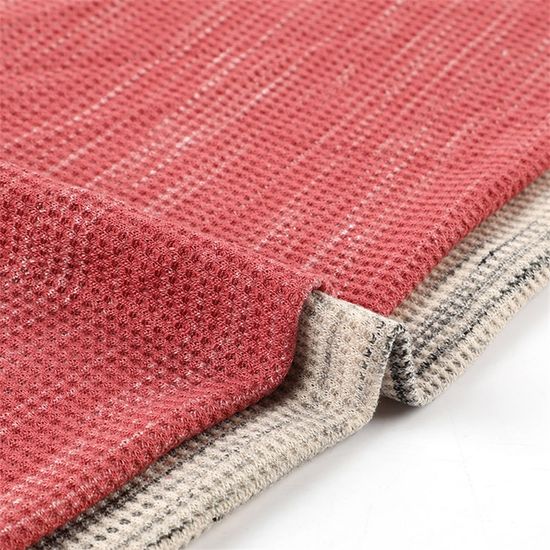


When evaluating waffle fabric, you must prioritize GSM (Grams per Square Meter), typically ranging from 180 to 350 GSM depending on the intended use (lightweight tees vs. heavy robes). Pay close attention to the material composition, such as 100% Cotton, Cotton-Polyester blends, or Rayon/Spandex mixes, as these dictate the fabric's breathability and elasticity. Additionally, verify the shrinkage rate, which should ideally be under 5% for high-quality knits, and check the colorfastness rating (Grade 3-4 minimum) to ensure the honeycomb texture retains its dye after multiple washes.
To ensure market entry and consumer safety, prioritize suppliers with OEKO-TEX® Standard 100 certification, which guarantees the fabric is free from harmful substances. If you are targeting the eco-conscious market, look for GOTS (Global Organic Textile Standard) or GRS (Global Recycled Standard). For U.S. imports, ensure the fabric meets CPSC flammability requirements (16 CFR Part 1610), and for the EU, verify compliance with REACH regulations regarding chemical usage.
The 'waffle' or 'honeycomb' weave is prone to snagging if not knitted correctly. Request physical samples to check the dimensional stability; the fabric should bounce back to its original shape after stretching. Examine the selvage quality to prevent unraveling and ensure the pilling resistance meets ISO 12945-2 standards. For wholesale orders, ask for a pre-shipment inspection report focusing on 'holes, stains, and needle lines' per the 4-Point System.
Lightweight waffle (150-200 GSM) is ideal for summer apparel, baby clothes, and thermal underwear due to its high breathability. Medium-weight (200-280 GSM) is the standard for hoodies, casual joggers, and polo shirts. Heavyweight waffle (300+ GSM) is best suited for luxury bathrobes, towels, and home textiles like throw blankets, where moisture absorption and thermal retention are critical.
Always utilize Trade Assurance services provided by platforms like Made-in-China.com to protect your payment until delivery is confirmed. It is highly recommended to hire a third-party inspection agency (like SGS or Intertek) to perform an In-Line or Final Random Inspection (FRI) at the factory. This ensures the dye lot consistency and fabric weight match your approved golden sample before the balance payment is made.
Negotiate based on Total Cost of Ownership (TCO) rather than just the price per yard. For custom colors (Lab Dips), suppliers usually require a higher MOQ (typically 500kg-1000kg). You can negotiate lower MOQs by choosing 'Ready to Ship' stock colors or by offering to pay a small-batch dyeing surcharge. Always ask for a volume-based discount schedule, where pricing drops significantly at the 5,000-yard and 10,000-yard thresholds.
Fabric rolls are bulky and susceptible to moisture damage. Ensure the supplier uses double-layer packaging (inner plastic bag + outer woven bag) and includes desiccants in the container to prevent mold during sea transit. For Incoterms, FOB (Free On Board) is generally preferred for experienced buyers to maintain control over freight costs, while CIF (Cost, Insurance, and Freight) may be easier for beginners. Ensure the HS Code (typically 6006.22 for dyed cotton knitted fabrics) is correctly declared to avoid customs delays and incorrect duty charges.
Conduct thorough supplier background checks on Made-in-China.com, looking for 'Audited Suppliers' with verified factory videos and business licenses. Before sharing custom patterns or proprietary knit designs, have the supplier sign a Non-Disclosure, Non-Use, and Non-Circumvention (NNN) Agreement tailored to Chinese law. Use secure payment methods like L/C (Letter of Credit) for large transactions or Escrow-based systems for smaller trial orders.