
Satisfies 1 requirement
IP65 Waterproof Solar Pillar Fence Lamp Outdoor Modern Front Door Solar Pillar Lamp 5W 7W 10W Solar Garden Lamp
US$10.50-12.50
200 Pieces(MOQ)

I have found results from6000+products and1000+suppliers aboutSolar pillar lamp


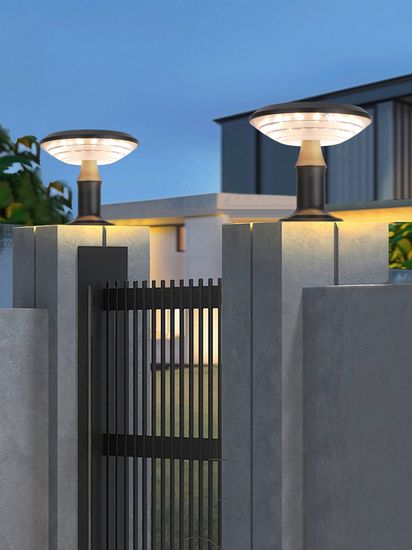


Selecting a high-quality solar pillar lamp requires balancing luminous efficacy, battery longevity, and weather resistance. Buyers should prioritize monocrystalline silicon solar panels over polycrystalline ones, as they offer 20-22% conversion efficiency, ensuring the lamp charges even on cloudy days. For the light source, ensure the LED chips (such as Lumileds or Bridgelux) provide at least 120-150 lumens per watt. Additionally, verify the IP (Ingress Protection) rating; a minimum of IP65 is essential to withstand heavy rain and dust, while IP67 is preferred for coastal or high-humidity environments.
The battery is the heart of the system. Professional buyers should insist on Lithium Iron Phosphate (LiFePO4) batteries, which offer over 2,000 charge cycles and better thermal stability compared to standard Ternary Lithium or Lead-acid batteries. Check the battery capacity (Ah) against the lamp wattage to ensure a discharge time of at least 10-12 hours. High-end models should feature an MPPT (Maximum Power Point Tracking) controller, which can increase charging efficiency by 15-30% compared to cheaper PWM controllers.
To prevent corrosion and structural failure, the housing should be made of die-cast aluminum with a UV-stabilized powder coating or 304/316 stainless steel. Avoid cheap ABS plastics for the main body as they degrade under intense sunlight. For the lampshade, impact-resistant polycarbonate (PC) or tempered glass is recommended to prevent yellowing and breakage. Ensure the product complies with CE, RoHS, and FCC certifications to meet international safety and environmental standards.
To optimize energy use, look for lamps with intelligent power management systems. Key features include PIR motion sensors (dimming to 30% brightness when no motion is detected) and time-control modes (e.g., 100% brightness for the first 4 hours, then 50% for the remainder). Some advanced models offer Remote Control for CCT (Correlated Color Temperature) adjustment, allowing users to switch between 3000K (Warm White) and 6000K (Cool White) depending on the architectural setting.
The biggest risks involve battery quality fraud and shipping damage. Some suppliers may use recycled or 'B-grade' lithium batteries that fail after six months. To mitigate this, request UN38.3 test reports and MSDS (Material Safety Data Sheets). For shipping, ensure the lamps are packed in 5-layer corrugated cartons with custom foam inserts, as the solar panels and glass components are highly fragile during sea freight handling.
When sourcing via Made-in-China.com, prioritize Audited Suppliers who have undergone third-party on-site inspections by firms like SGS or TÜV Rheinland. Use Secured Trading services to ensure that payment is only released to the supplier after you have confirmed receipt and quality. Always request a pre-shipment inspection (PSI) to verify that the technical specs of the bulk order match the approved sample.
Solar pillar lamps are classified as Dangerous Goods (UN3481) because they contain lithium batteries. You must work with a freight forwarder experienced in Class 9 hazardous materials. Ensure the supplier provides the correct battery labeling and documentation to avoid customs seizures or airline rejections. For large volumes, FOB (Free On Board) terms are recommended so you can maintain control over the shipping costs and the choice of carrier.
Focus on Total Cost of Ownership (TCO) rather than just the unit price. Negotiate for a 2-3 year replacement warranty and ask the supplier to include 1-2% spare parts (LED drivers or sensors) free of charge in the container. For orders exceeding 500 units, you should aim for a 15-20% discount compared to the sample price and request OEM branding/custom packaging to increase your market competitiveness.