
Satisfies 1 requirement
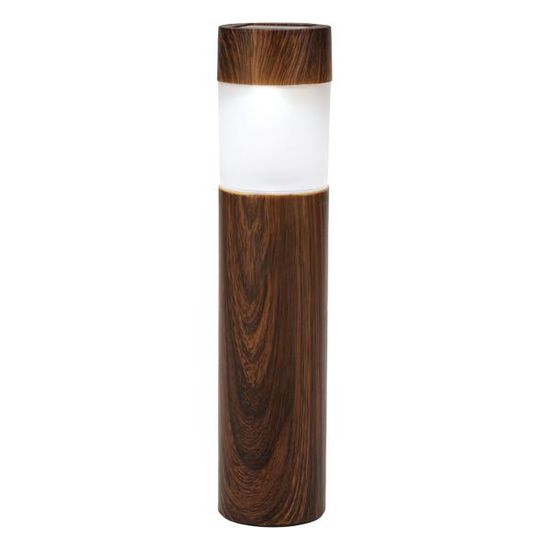
Waterproof IP54 Outdoor Solar LED Garden Bollard Light Solar Pathway Light with Spike Eco-Friendly Auto-Night Mode
US$5.30-5.80
500 Pieces(MOQ)

I have found results from7000+products and2000+suppliers aboutSolar bollard led light




Selecting high-quality solar bollards requires balancing luminous efficacy, battery longevity, and structural durability. For commercial or municipal projects, prioritize lights with Monocrystalline Silicon solar panels, as they offer the highest conversion efficiency (up to 22%). Ensure the battery is LiFePO4 (Lithium Iron Phosphate), which supports over 2,000 charge cycles and performs better in high temperatures compared to standard Li-ion batteries. Additionally, verify the IP65 or IP67 waterproof rating to ensure the units can withstand heavy rain and dust ingress.
Buyers should evaluate the Lumen output (typically 100-300lm for decorative path lighting) and the Color Temperature (CCT), usually ranging from 3000K (warm white) to 6000K (daylight). A critical metric is the Autonomy Days, which refers to how many nights the light can operate without sunlight; professional-grade bollards should offer 3-5 days of backup power. Look for integrated MPPT (Maximum Power Point Tracking) controllers which can increase charging efficiency by 20-30% during cloudy conditions.
To ensure market entry and safety, products must carry CE, RoHS, and FCC certifications. For the North American market, UL or ETL listing is highly recommended. Since these products contain batteries, suppliers must provide a UN38.3 test report and MSDS (Material Safety Data Sheet) for air or sea freight compliance. For public infrastructure projects, check if the product meets IK10 impact resistance standards to prevent vandalism.
While the initial unit cost of solar bollards is higher than wired alternatives, the Total Cost of Ownership (TCO) is significantly lower due to the elimination of trenching, cabling, and electricity bills. Calculate the ROI based on zero labor costs for wiring and minimal maintenance. On Made-in-China.com, you can find tiered pricing where bulk orders of 100+ units often trigger discounts of 15-25%, further shortening the payback period.
The biggest risk is battery degradation during long-term transit or the use of 'second-life' batteries. Always demand a freshness guarantee for batteries and use third-party inspection services to verify the battery capacity and solar panel wattage before the final payment. Another risk is shipping damage to the internal glass or PC diffusers; ensure the supplier uses reinforced 5-layer corrugated packaging with EPE foam inserts.
Focus your negotiation on component transparency. Instead of just asking for a lower price, ask for the brand of the LED chips (e.g., Bridgelux or Osram) and the specific capacity of the LiFePO4 battery. Request a 2-5 year warranty and clarify whether the warranty covers replacement shipping costs. For large-scale orders, negotiate a 30% deposit and 70% balance payment after a successful pre-shipment inspection.
Solar bollards are classified as Dangerous Goods (DG) due to the lithium batteries. Ensure your freight forwarder is experienced in handling Class 9 hazardous materials. Shipping via Sea Freight (LCL/FCL) is the most cost-effective method for heavy bollards. Always confirm the Incoterms; for beginners, DDP (Delivered Duty Paid) is often preferred as the supplier handles all customs clearances and import duties, reducing the risk of the shipment being stuck at the border.